
Flat Roof Maintenance for GTA Homes and Small Buildings
Clear, practical steps to keep flat roofs watertight through GTA winters and summers.
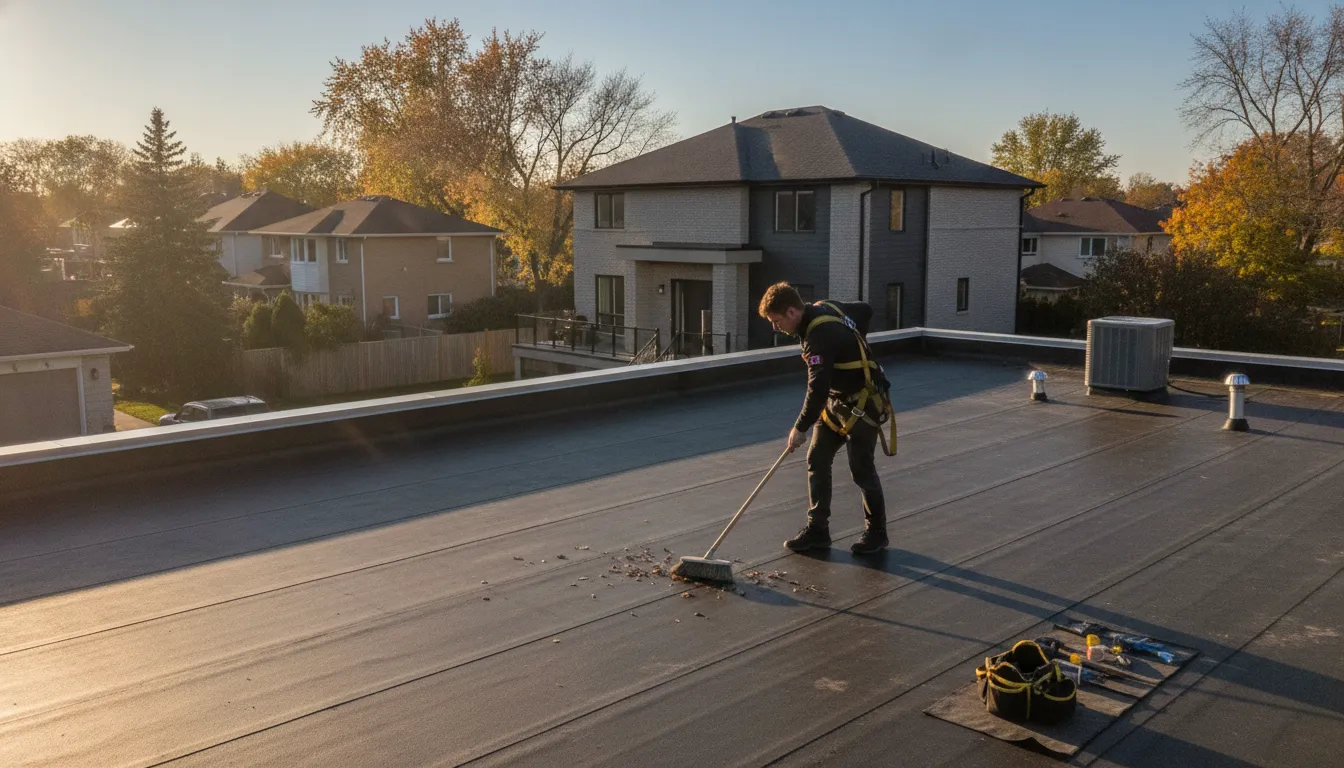
What is the best way to keep a flat roof watertight in the GTA?
Regular inspections, seasonal cleaning, timely minor repairs, and a proactive relationship with a reputable roofing contractor keep most flat roofs watertight in the Greater Toronto Area.
Understand your roof type
Flat roofs on homes and small buildings are usually low-slope systems built from modified bitumen, single-ply membranes (like EPDM or TPO), built-up roofing (BUR), or metal assemblies. Each material has different vulnerability points—seams on single-ply, flashings on modified bitumen, and lap corrosion on metal—so your maintenance plan should match the material.
Inspect on a schedule
Inspect at least twice a year—spring and fall—and after extreme weather. In Mississauga and the wider Peel Region (near Toronto and Brampton), freeze-thaw cycles, heavy snow loads, and summer storms create predictable stressors that make scheduled checks a cost-effective first line of defense.
Maintain drainage and flashings
Standing water is the most common short-term risk to flat roofs. Keep scuppers, internal drains, gutters, and downspouts clear; repair or replace failed flashings around parapets, vents, HVAC curbs, and roof penetrations promptly to prevent leaks.
Step-by-Step: Flat Roof Maintenance for GTA Homes and Small Buildings
Follow these practical steps each season to reduce leak risk and extend service life. Safety first: use fall protection and consider hiring a pro for steep or high parapet roofs.
- 1
1. Do a visual survey from the ground
Walk the perimeter and check for obvious issues: pooled water, sagging sections, loose flashing, or debris. Note locations and photograph them—dated photos simplify communication with contractors or insurers if the condition deteriorates.
- 2
2. Clear debris and test drainage
On the roof, remove leaves, branches, and sediment from drains, scuppers, and gutters. Pour water through each drain or scupper to confirm it runs freely; standing water deeper than a couple of inches after a day of dry weather signals a drainage problem that needs repair.
- 3
3. Inspect flashings and seams
Examine flashing at parapets, vents, chimneys, and HVAC curbs for cracks, gaps, or adhesive failure. For single-ply membranes, check seam adhesion; for modified bitumen look for blisters and open laps. Small splits can be patched, but failing flashings often need competent resealing or replacement.
- 4
4. Check roof-mounted equipment and penetrations
Make sure HVAC units, solar mounts, and plumbing vents are securely fastened and their curbs are properly flashed and sealed. Vibration and movement can open seals—tighten mounts and re-caulk as needed to prevent water entry.
- 5
5. Schedule minor repairs or preventative work
Address soft spots, seam separation, or small blisters promptly—patching today can prevent a tear or leak tomorrow. Ask your contractor about preventative coatings or enhanced flashings if the membrane is aging but not yet failing.
- 6
6. Keep records and plan replacement
Record inspection dates, conditions, repairs, and photos in a maintenance log. When repair frequency or cost rises, plan a budget and timeline for partial or full replacement—proactive planning limits emergency repairs and helps with financing decisions.
Mistakes to Avoid
Avoid shortcuts that cause costly water intrusion or shorten roof life. The following mistakes are common and preventable with a consistent maintenance routine and a cautious approach to repairs.
Skipping seasonal inspections
Many homeowners check their roof only after a leak shows up. In a climate like Mississauga's—long winters and active spring/summer storms—waiting lets small issues grow into structural damage. A twice-yearly inspection catches deterioration early and is a low-cost habit.
Ignoring drainage problems
Leaving drains partially blocked because clearing them is inconvenient leads to ponding, accelerated membrane wear, and increased load on the structure. Fix the root cause—clear sediment, correct the slope if possible, or install additional scuppers or overflow devices.
Using incompatible repair materials
Applying the wrong adhesive, coating, or patching material can fail quickly and void manufacturer warranties. Match repair materials to the membrane type (for example, solvent-based adhesives are often wrong for EPDM). If you’re unsure, get a contractor’s recommendation and insist on product names.
Delaying replacement until after severe failure
Patching an aging roof repeatedly is more expensive long-term than planning a timely replacement. When repairs become frequent or interior finishes repeatedly get damaged, replacement planning should move to the top of the priority list.
What Affects Your Outcome
Several practical and local factors change how well maintenance prevents leaks and the speed of successful repair.
Roof material and age
Newer membranes and certain materials tolerate repairs better; older BUR or degraded modified bitumen may be brittle and prone to repeated issues. Age informs whether patching or replacement is the better investment.
Quality of documentation
Photographs, maintenance logs, and contractor invoices help diagnose recurring problems and make insurance conversations smoother. Good records shorten disputes and improve the odds of fair outcomes for claims—verify local insurer expectations in Ontario.
Local climate and seasons
Mississauga’s freeze-thaw cycles, heavy snowfall periods, and occasional summer storms create distinct seasonal risks. Timing inspections after snowmelt and before spring rains is especially important in the GTA region.
Contractor selection
Experience with the local code, Ontario construction practices, and specific membrane types matters. Choose roofers with local references and insurance; confirm they carry liability and WSIB coverage for work in Peel Region and nearby cities like Brampton and Oakville.
Permit and municipal rules
Some roof alterations, large mechanical curb work, or rooftop decks may require permits from the City of Mississauga or Region of Peel; always check with your local building department. Permit requirements and inspection timelines affect repair timing and cost—verify locally.
Insurance policy terms
Coverage for roof leaks often depends on cause (sudden damage versus wear and tear) and policy language in Ontario homeowner insurance. Confirm coverage, deductibles, and claim filing windows with your insurer; policies and practice vary, so verify locally.
Frequently Asked Questions
How often should I inspect a flat roof on my Mississauga home?
Inspect at least twice a year—spring and fall—and after major storms or heavy snow events. Seasonal checks catch winter-related damage from freeze-thaw cycles common to the GTA and let you schedule repairs before spring rains.
Can I patch a flat roof myself, and when should I hire a pro?
Small, surface-level issues like minor splits or single-patch repairs can be handled by a skilled DIYer who follows manufacturer instructions and uses compatible materials. For repeated leaks, large blisters, structural sagging, or work requiring roof anchors and safety gear, hire a licensed roofing contractor experienced with local codes.
What maintenance helps prevent ice dam and snow damage on flat roofs?
On flat roofs, the priority is good drainage and preventing snow from packing and blocking scuppers or drains. Clear snow accumulations that create deep ponding, and ensure internal drains have functioning strainers and heat tracing if your building uses it; consult a contractor before using mechanical melt methods that could damage membranes.
How do I know if a leak is from the roof or interior plumbing?
Trace stains and water paths: roof leaks often appear near walls, around skylights, or under roof-mounted equipment and typically correlate with rainfall. Plumbing leaks usually coincide with fixtures above the ceiling. When in doubt, document occurrences with dates and photos during and after events and engage a professional to pinpoint the source.
Will my homeowner’s insurance pay for flat roof repairs in Ontario?
Insurance often covers sudden, accidental damage but typically excludes deterioration from normal wear and lack of maintenance. Coverage decisions vary by policy and insurer, so notify your insurer promptly for guidance and check local Ontario requirements—keep all inspection records and contractor estimates to support a claim.
When should I plan a full roof replacement rather than continuing repairs?
Plan replacement when repairs become frequent, when large areas of the membrane are compromised, or when structural issues are present. If the roof is near the expected service life of its material or the building has repeated interior damage from leaks, replacement is usually the more economical long-term solution.
Free flat roof inspection for GTA homes and small buildings
Schedule a no-cost visual inspection and written maintenance checklist tailored to your roof in Mississauga, Peel Region, or nearby Oakville and Brampton.
Get a Free Quote