
Ice Damming: Why It Happens on GTA Roofs and How to Stop It
Understand why ice dams form in Mississauga and how to stop them before they damage your home.
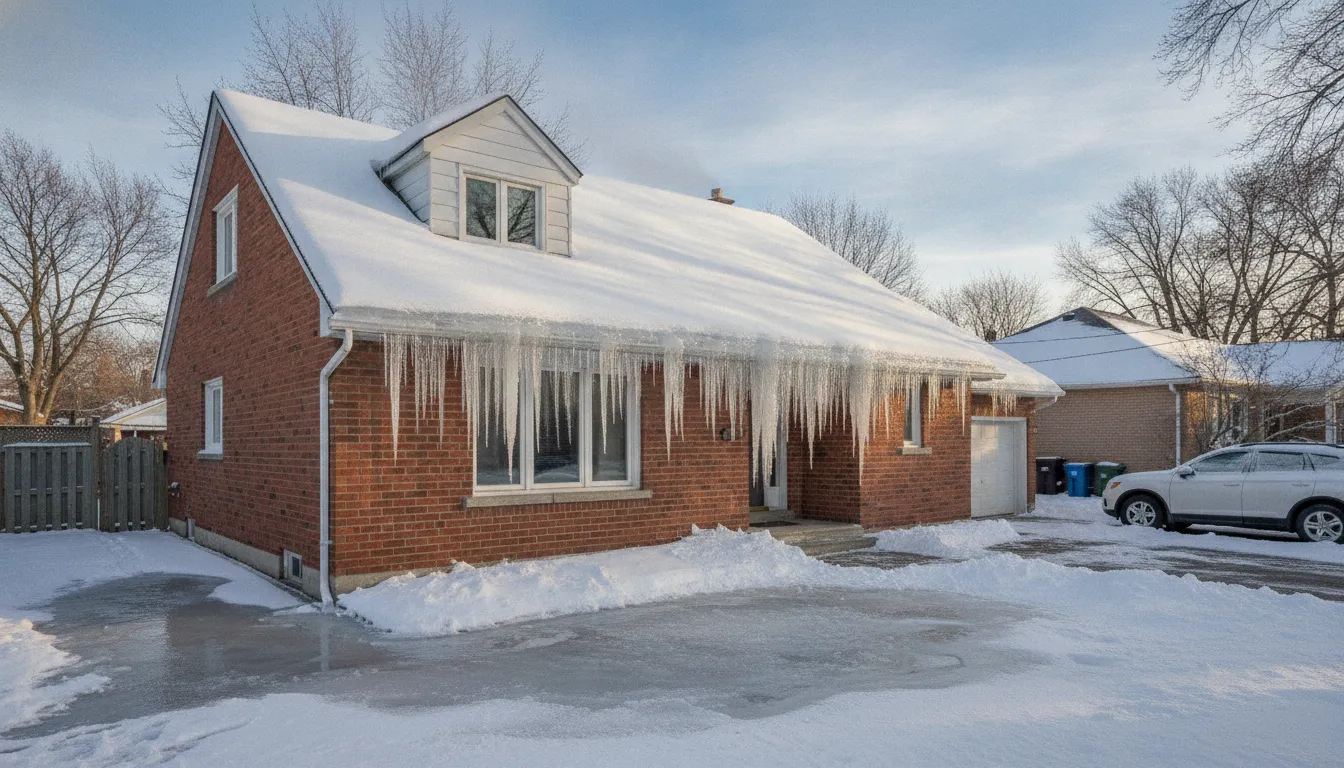
What causes ice dams on my roof?
Ice dams form when heat leaving the home melts rooftop snow, the meltwater runs down to colder eaves and refreezes there, creating a ridge of ice that traps more water under shingles.
Roof temperature differences
A warm roof surface over the living space and a cold roof over the eaves creates the melt-and-refreeze cycle that builds an ice dam. Uneven insulation or heat leaks through the attic are the most common sources of that warmth.
Ventilation and attic airflow
Poor air circulation lets warm pockets develop under the roof deck; balanced intake and exhaust ventilation help keep the roof closer to outside temperature and slow snowmelt.
Snowpack and weather patterns
Greater snow depth and cyclical freeze–thaw weather—typical in Mississauga, Peel Region, and nearby Toronto or Oakville—supply the water that becomes the ice. A wet heavy snow followed by daytime thaws is the riskiest combination.
Roof details and drainage
Long, unbroken eaves, valley intersections, and low-slope roof sections let meltwater back up. Gutters clogged with debris exacerbate backup at the eaves and increase dam formation risk.
Step-by-Step: Ice Damming: Why It Happens on GTA Roofs and How to Stop It
A practical sequence homeowners can follow during winter and when addressing existing ice dams. Use this both for immediate action and for longer-term prevention.
- 1
Recognize and document the problem
Walk the perimeter and attic (safely) to look for icicles, ice ridges at eaves, stains on ceilings, or damp insulation. Photograph icicles, ice lines, interior water stains, and roof sections for records—helpful for contractors and any insurer contact.
- 2
Take safe immediate actions
Remove low-hazard icicles from ground level and clear gutters if you can do so safely from a stable ladder. Do not chip at the ice dam from the roof—this risks shingle and deck damage and personal injury.
- 3
Mitigate water entry temporarily
If water is entering, move valuables and place catch pans, and use contractors’ flood-safe measures like temporary interior tarps or drip pans. For active leaks, a temporary patch (roofing tape or underlayment applied by a pro) can slow damage until permanent repairs.
- 4
Inspect attic insulation and ventilation
Have a qualified contractor or energy auditor measure insulation depth, check for gaps, and verify ventilation paths. Fixing heat leaks—sealing recessed lights, chimneys, and attic access—reduces roof warming and future dams.
- 5
Plan permanent roof and gutter fixes
Options include increasing insulation, adding ventilation baffles, installing ice-and-water shield at eaves when reroofing, and ensuring gutters are clear or heated where needed. Choose materials and design suited for Peel Region’s freeze–thaw cycles.
- 6
Follow through and maintain
After repairs, maintain attic vents, keep attic insulation dry and continuous, and clear gutters and downspouts each fall. Monitor after major storms and adjust strategies as needed.
Mistakes to Avoid
Some responses to ice dams actually make the problem worse or create new hazards. Avoid quick fixes that risk the roof deck, your safety, or future insurance problems.
Chipping ice off the roof
Pounding at an ice dam with hammers or prybars tears shingles and can split roof sheathing. That damage leads to leaks and more costly repairs; instead hire a pro to use steam or mechanical de-icing methods that are controlled and minimize roof damage.
Relying solely on roof rakes
A roof rake is useful to remove snow near eaves but only reaches a portion of the roof and won’t address heat leaks or insulation problems. Use it as a short-term mitigation tool after storms, then address attic heat loss for a permanent fix.
Ignoring attic air leaks during repairs
Putting on new shingles or a heated gutter without sealing attic air leaks is like patching the symptom, not the cause—ice dams will likely return. Prioritize air sealing and an insulation program when scheduling roofing work.
Assuming insurer rules are uniform
Insurance practices and coverage for ice-dam-related damage can vary across Ontario insurers and policies. In Mississauga and Peel Region, it's common to contact your insurer promptly, but always verify your policy and claims process with your insurer locally.
What Affects Your Outcome
Several practical factors change how your ice-dam situation is resolved and how much it will cost.
Severity of roof damage
Minor ice buildup may need only targeted repairs; widespread shingle and decking damage requires a full reroof. The visible condition during inspection affects repair scope and timeline.
Quality of documentation
Clear photos, dates, and notes of conditions and actions speed contractor estimates and insurer review. Good records reduce disputes and accelerate settlement in claim scenarios.
Type of home insurance policy
Policies differ on coverage for ice-dam-related water damage versus maintenance issues; some cover sudden damage but not gradual wear from repeated events. Verify with your insurer and keep maintenance records.
Local building and permit rules
Permit requirements for roof work vary across Mississauga, Peel Region, and nearby Oakville or Toronto—confirm with your local building department before major structural changes. Smaller repairs often don't need a permit, but reroofing or ventilation changes sometimes do.
Contractor selection and qualifications
Experienced roofing contractors will evaluate attic science (insulation, ventilation) as well as the roof surface. Choose licensed, insured tradespeople with local skyline experience in the GTA climate.
Timing and weather
Scheduling work outside freeze–thaw storms helps the crew install materials properly and reduces rework. In Mississauga, plan major corrective work for late spring to fall when access and drying are easiest.
Frequently Asked Questions
Can I safely remove an ice dam myself?
No—removing an ice dam from the roof yourself is risky. Use a roof rake to remove overhanging snow from ground level and call a qualified contractor for roof-top removal or steam de-icing to avoid injury and roof damage.
Will my homeowner’s insurance pay for ice-dam damage?
Coverage varies by insurer and policy language. Many policies cover sudden interior water damage from ice dams, but not damage caused by poor maintenance; document everything and contact your insurer promptly to confirm.
Do heated cables on gutters stop ice dams?
Heated cables can reduce ice buildup at the eaves but they don’t fix attic heat loss or ventilation problems. Use them as a supplemental solution where appropriate, and verify electrical and warranty considerations locally in Mississauga.
How much insulation do I need to prevent ice dams?
Prevention focuses on continuous insulation and proper air sealing rather than a single R-value. In Ontario homes, aim for a well-sealed attic floor with insulation depth and density recommended by local building guidance—an energy auditor can give a specific target for your house.
What role does attic ventilation play?
Balanced ventilation (cold air intake at the soffits and warm exhaust near the ridge) helps keep the roof deck near outdoor temperature and reduces melting. Ventilation must pair with insulation and air sealing to be effective.
When should I call a roofing contractor versus an energy auditor?
Call a roofing contractor if you have visible roof damage, active leaks, or need ice removal. If your goal is long-term prevention—insulation upgrades, air sealing, or ventilation assessment—an energy auditor or a contractor who does whole-roof science is the right first step.
Free ice-dam inspection and attic check for GTA homes
Schedule a no-cost assessment of your roofline, attic insulation, and ventilation—helpful for Mississauga, Peel Region, Toronto, and nearby homeowners.
Get a Free Quote