
Wind and Hail Damage: Handling a Roof Insurance Claim in Ontario
What to document, how to file, and how to get repairs approved after storm damage.
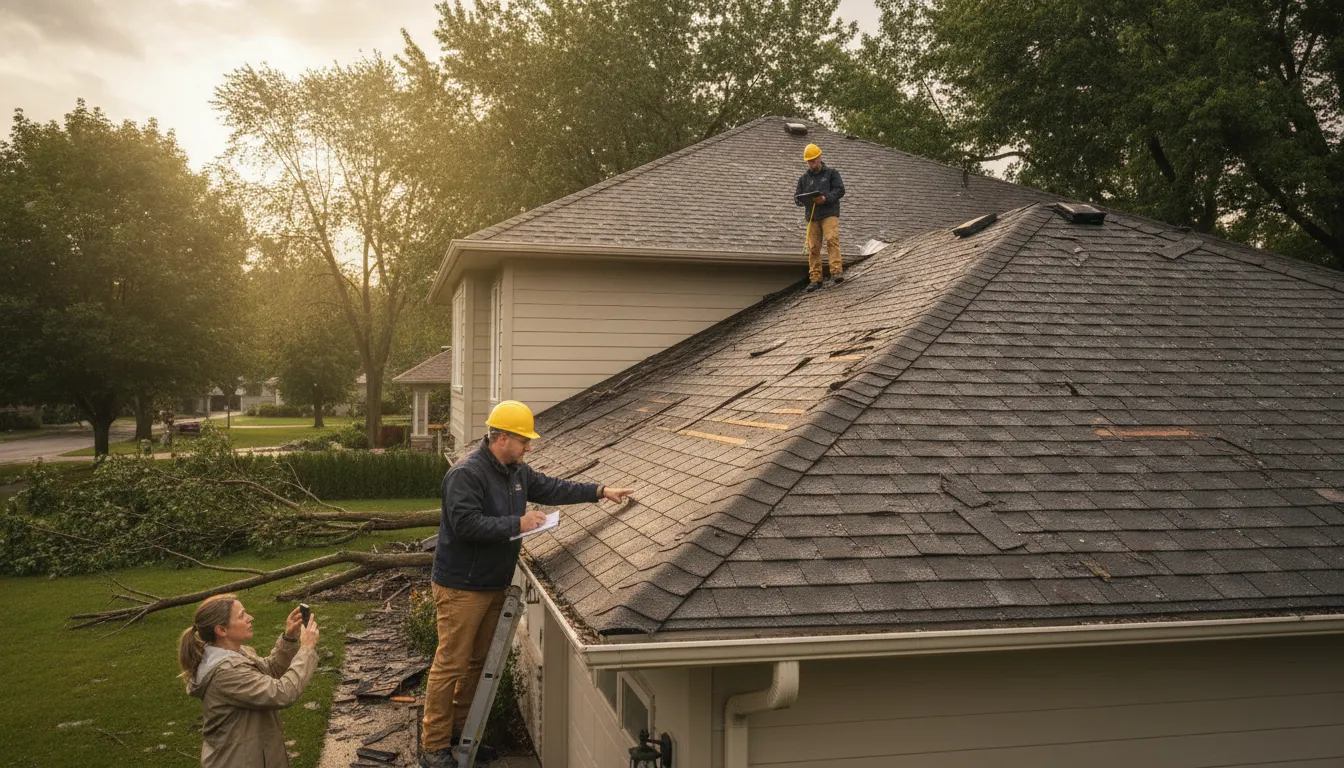
How do I handle a wind or hail roof claim in Ontario?
Start by documenting damage thoroughly, then notify your insurer promptly, get a licensed contractor’s estimate, cooperate with the adjuster, and confirm permits before repairs begin — verify specific timelines and requirements with your insurer and local building office.
What counts as wind or hail damage
Wind damage includes missing or lifted shingles, exposed underlayment, or loose flashing from gusts. Hail damage often shows as dents in metal flashing, bruises or granule loss on shingles, and cracked vent caps; some signs are subtle and require close inspection on a ladder or photos.
Insurance versus wear-and-tear
Insurers generally cover sudden storm events rather than gradual deterioration from age or maintenance neglect. If your roof is near the end of its expected life, carriers may reduce or deny payment for damage they deem due to wear — document prior condition and any routine maintenance to support your claim.
Why documentation matters
Photos, video, and dated notes from the moment you discover damage create an objective record that helps with claim timing and scope disputes. Include images of the entire roof, close-ups of affected areas, interior leaks, and any fallen debris such as shingles or granules on downspouts and eaves.
Local context: Mississauga and nearby
Mississauga homeowners should be ready for strong lake-effect wind storms and summer hail; nearby Burlington and Oakville can see the same storm systems. Local building departments in Peel Region have specific permit and inspection practices — always confirm requirements with the Mississauga permit office before replacing roof decking or changing roof pitch.
Step-by-Step: Wind and Hail Damage: Handling a Roof Insurance Claim in Ontario
Follow this practical sequence after you suspect wind or hail damage. Timing, photos, and clear communication with your insurer and contractor are the keys.
- 1
1. Ensure safety and limit further damage
If there are active leaks, move belongings and place buckets under drips; cover exposed areas with a tarp if safe. Don’t climb onto a steep or wet roof yourself — call a qualified professional in Mississauga who knows local conditions.
- 2
2. Document everything immediately
Take wide and close-up photos, video walkthroughs, and notes about when the damage was first noticed. Photograph the surrounding property and any debris — insurers look for corroborating evidence of a storm event.
- 3
3. Review your policy and note deadlines
Find your homeowner policy’s sections on wind, hail, wind-driven rain, deductibles, and replacement-cost versus actual-cash-value. Policies and time limits can vary in Ontario; call your insurer to report the event within the timeframe required to avoid a late-reporting denial.
- 4
4. Notify your insurer and provide documentation
File a claim by phone or through your insurer’s app and upload your photos and notes. Be factual: provide dates, describe visible damage, and save claim numbers and contact names for later reference.
- 5
5. Arrange an adjuster inspection and get contractor estimates
An adjuster will inspect and prepare a scope of loss; bring your contractor or ask your contractor to prepare a detailed written estimate including materials, labor, and any proposed decking replacement. In Ontario, having an experienced Mississauga roofer who understands local permit needs helps avoid surprises at settlement.
- 6
6. Review the settlement, obtain permits, and start repairs
When you receive an approval, confirm what the insurer pays (actual-cash-value or replacement cost) and whether depreciation will be released when repairs are complete. Before starting work, check with the City of Mississauga’s building department if structural changes or full reroofs require permits — proceed only after permits are secured.
Mistakes to Avoid
Small missteps can lead to claim denials, delayed repairs, or out-of-pocket costs. The following errors are common and avoidable with a practical approach.
Waiting too long to report the damage
Delaying notification can jeopardize coverage — many policies require prompt reporting and investigation. Even if you’re unsure how severe the damage is, report the event, submit photos, and ask your insurer about next steps to preserve your claim rights.
Accepting the first lowball estimate
Insurer adjusters sometimes underestimate repair scope to limit payout; get at least one independent, written estimate from a licensed roofer in Mississauga. A local contractor will spot hidden damage like compromised underlayment or nail pops that affect long-term performance.
Starting repairs without permits or documentation
Roof replacements sometimes trigger municipal permits or inspections; doing work first can complicate an insurer’s ability to verify repairs. Keep all invoices, permit receipts, and before-and-after photos to demonstrate proper repair practices if your insurer requests proof.
Hiring an unlicensed or uninsured contractor
A low price from an unlicensed crew may cost more later if workmanship fails or they don’t pull required permits. Verify contractor insurance, references, and ability to work in Peel Region before signing, and insist on a written contract specifying materials and cleanup.
What Affects Your Outcome
Several practical factors influence claim approval, payout size, and repair timing.
Quality and timeliness of your documentation
Clear photos and prompt reporting make it easier to show a storm caused the damage rather than age. Time-stamped images or video and dated notes are especially persuasive.
Policy type and deductible
Replacement-cost policies pay more than actual-cash-value plans; a high deductible may leave you paying much of the small-claim repair. Check your policy language or talk to your broker to know what to expect.
Pre-existing roof condition
If the roof was near the end of its expected life or showed previous leaks, insurers may limit coverage. Routine maintenance records and receipts can help show you kept the roof in reasonable condition.
Local building and permit rules
Mississauga and Peel Region have their own permit triggers for reroofs or structural repairs; needing a permit can slow the timeline and change contractor requirements. Confirm permit needs with the City of Mississauga to avoid rework.
Adjuster and contractor assessments
An experienced adjuster and a qualified local contractor that document damage consistently tend to produce smoother settlements. Discrepancies between adjuster and contractor scopes are common — keep communications written and ask for itemized explanations.
Seasonal and weather factors
Spring and summer storm seasons in Ontario often increase insurance workload and contractor demand, which can delay inspections and repairs. Plan for longer lead times during peak periods and secure tarps or temporary fixes if immediate repair isn’t possible.
Frequently Asked Questions
How soon must I report wind or hail damage to my insurer in Ontario?
Policies differ, but you should report damage as soon as you reasonably can after discovering it to avoid late-notice problems. If you’re unsure about timing, call your insurer, explain the situation, and ask for the claim filing window for storm events.
Will my insurer pay for a full roof replacement after hail?
That depends on your policy (replacement-cost vs. actual-cash-value), the extent of the damage, and whether the roof’s pre-existing condition contributed. An adjuster will assess; if replacement is needed, confirm how depreciation and recoverable costs are handled under your coverage.
Do I need a permit to replace my roof in Mississauga?
Often yes — full roof replacements and structural repairs commonly require a building permit in Mississauga and across Peel Region. Always verify with the City of Mississauga building department before starting work, since rules and requirements can vary.
Can I hire my own contractor to estimate before the adjuster comes?
Yes — getting an independent, written estimate from a licensed local roofer is a good idea and helps you understand the likely repair scope. If possible, share that estimate with the adjuster or have your contractor attend the inspection to point out concealed damage.
What if the insurer denies my claim for hail or wind?
First, ask for a written explanation and review the denial letter against your policy wording. You can provide additional documentation, request a reinspection, involve a public adjuster, or consult a lawyer — and always check timelines for appeals or complaints with Ontario’s insurance regulator.
How do I choose a contractor for storm-damaged roofs?
Pick a contractor licensed, insured, and experienced with insurance claims in the GTA; ask for references, written estimates, and a clear contract. Local knowledge of Mississauga, Burlington, or Oakville building department procedures is helpful, and avoid contractors who demand large upfront payments or pressure you to sign quickly.
Free roof inspection for wind or hail concerns
Schedule a no-cost assessment with a local Mississauga roofer to document damage and estimate repairs before you file a claim.
Get a Free Quote